Earlier this year, I was invited to be in conversation with The Queer Muslim Project and Tvarita Arts Collective at the Museum of Art and Photography (MAP) for their third annual Inclusion Conference entitled, “Beyond Headcount Diversity.” Based on my initial discussions with each of the participating groups, I had developed a set of questions for them to reflect on, add to, and prepare for the session, and for us to collectively fill the room with an extended audience discussion as we conclude.
As a panel, we also made a prefatory note and appeal, asking folx to be aware that we will engage with difficult issues related to systemic oppressions and that we would appreciate them respecting the privacy of our sharings to honour the work and communities we engage with. This post follows that concern and enlists just the questions I had prepared for the panel. My thanks to the participating artist collectives for their sincere and moving reflections to the following set, involving four interrelated frames of practice and patronage; colonial histories and legacies; vulnerability, dignity, and everyday life; and education—or speaking for and with people.
Practice and Patronage:
+ What does attending to inclusion and inclusive practices mean to you?
+ At what scale does inclusion feel palpable and transformative in the types of cultural and public engagements you foster as collectives?
+ I want to bring “the GLAM gaze” into this discussion—or how art and cultural organizations, platforms, and initiatives may turn artistic forms, creative expressions, and people’s histories into objects of specialized view, capitalist consumption, and value extraction. Taking a cue from the writings of Sara Ahmed, I want to ask: how might you reflect on what inclusion “does” by focusing on what inclusion “obscures” within the wider fields and patrons of your respective practices?
Colonial Histories and Legacies:
+ I want to further this topic of inclusion in the context of conservative ideologies as often mobilized through queer discourses on “homonationalism” or folk art discussions on “Indigeneity.” That is, how in the name of decoloniality, frames such as “queer” and “folk” can be (and have been) co-opted to uphold the agenda of narrow identitarian politics, making the very transformative work of queerness and Indigeneity exclusionary. How might you reflect on navigating these complexities in your respective works? And what have been the forms of resistance and refusals in your artistic collectivizing, if any, to such long durée colonialities?
Vulnerability, Dignity, and Everyday Life:
+ One of the questions I see as connecting both of your practices is that of dignity, of ensuring the dignity of discourses and art forms, of work and workers that are often placed outside the frame of commonplace art and cultural reference. Can you talk about your everyday experiences—“critical descriptions”—where this very experience of dignity felt particularly challenged—and how did you address that challenge?
Education or Speaking For/With People:
+ Given that your respective practices share an orientation to building consciousness about occluded histories in art and society, can you talk about the politics of representing these lived histories with communities or who speaks and acts for and with “the community” in the types of facilitations you scaffold or programming you develop for the public?
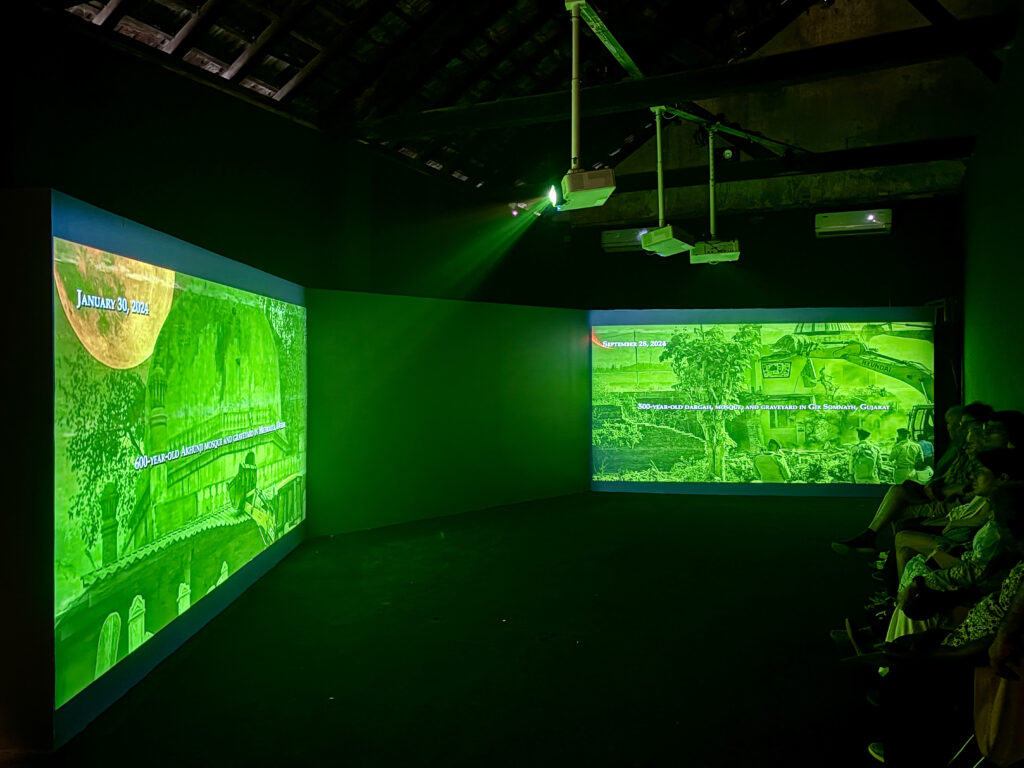
Image: Alaq, a three-channel cinematic installation by Pallavi Paul exploring the theme and forms of contagion at the 6th Kochi-Muziris Biennale, February 2026.